Pick the BVI when relaxed catamaran cruising, sheltered water, and value are driving the trip: most of our BVI clients book between $30,000 and $60,000 for the week, and no cruising ground in the Caribbean is easier to live on. Pick St Barts when the week is built around a serious motor yacht and a serious shore scene: our St Barts charters start around $80,000 to $100,000 and most land between $80,000 and $150,000, with New Year’s week in a pricing universe of its own. We broker crewed charters in both places (mybvicharter.com is our site too), so this is how we actually route clients, not a pitch for either island.
- A typical BVI booking with us runs $30,000 to $60,000; a typical St Barts booking runs $80,000 to $150,000.
- The BVI is the Caribbean’s easiest cruising ground: short, sheltered hops and a fleet built around catamarans. St Barts is open Leeward Islands water, big migratory motor yachts, and the most polished harbor town in the Caribbean.
- Neither destination charges VAT on the charter fee. Both quote plus APA (25 to 30% for fuel, food, drinks, and dockage), and each has its own small local fees.
- You can combine them in one charter of 10 days or more; our brokers route it through Spanish Town to clear customs.
Everything here is about private crewed charters: the whole yacht, your group only, a professional crew. Day boats and bareboat sailing are different products, and neither is what we arrange.
The Short Answer, by Trip Type
- Families and first-time crewed charterers: the BVI. The islands wrap around the Sir Francis Drake Channel, so most days are 1 to 2 hour hops on protected water, and the catamarans this market is built on give kids and grandparents space to spread out.
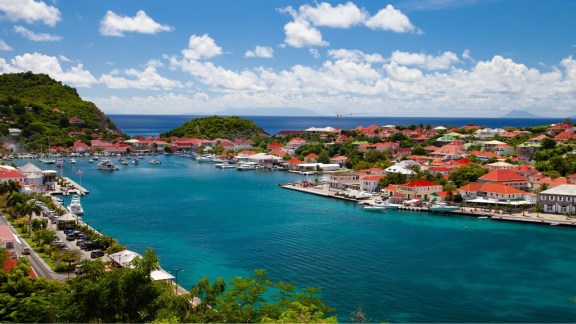
- Groups who want the scene: St Barts. Gustavia in winter is the Caribbean’s answer to the Riviera: French restaurants, beach clubs, shopping, and a harbor full of yachts worth looking at. If dressing for dinner is part of the dream, this is the island.
- Budgets of $30,000 to $60,000: the BVI, honestly. That money books a genuinely good crewed catamaran week there. In St Barts it does not clear the floor, and we would rather tell you that now than show you a compromise boat in the most expensive corner of the Caribbean.
- Motor yacht clients from $80,000 up: St Barts. The winter fleet here crosses from the Mediterranean and it shows: this is where the Caribbean’s South-of-France-caliber boats spend the season.
- New Year’s: St Barts, booked early. The festive week is the island’s signature event. Our St Barts New Year’s page covers how we plan it; the short version is that serious briefs are placed up to a year out.
What a Week Actually Costs in Each
In the BVI, crewed catamarans start around $30,000 for the week and quality motor yachts from about $40,000 to $50,000; most of our BVI clients book between $30,000 and $60,000, and the band we steer stronger groups toward is $60,000 to $100,000, where the crew and finish step up noticeably. The full breakdown is in our BVI cost guide.
In St Barts, the realistic entry point is $60,000 to $80,000 for a crewed catamaran and $80,000 to $100,000 for a motor yacht, with most bookings between $80,000 and $150,000 and the top of the market far above that. The gap is not a markup for the postcode. It is the product: the St Barts winter fleet is largely 40 to 70 meter motor yachts that summer in the Med and cross the Atlantic for the season, so you are comparing different boats, not different price tags on the same boat. Our St Barts cost guide breaks the tiers down properly.
Both markets quote plus APA: budget 25 to 30% on top of the charter fee for fuel, food, drinks, and dockage, with receipts.
The Tax Line Nobody Explains
Here is the pleasant surprise: neither island charges VAT on your charter fee. The small print differs, and it is worth 60 seconds.
The BVI has no VAT at all. What it does have is per-person government fees: a cruising tax of a few dollars per person per day on BVI-based yachts (currently around $4 to $6, and $16 per person per day on yachts based outside the territory), plus a modest national parks permit for the mooring fields. On most quotes these fees are small line items; our BVI cruising tax guide has the current numbers.
St Barts is French, which makes people assume EU-style VAT. It does not apply: the island sits outside the EU VAT area, and we have had this confirmed directly with a fiscal agent on the island, including for EU-flagged yachts. The 5% tourist tax you may have read about is an accommodation tax for villas and hotels, not for your charter. What you will see instead are small port and clearance fees, itemized on the quote.

Broker insight
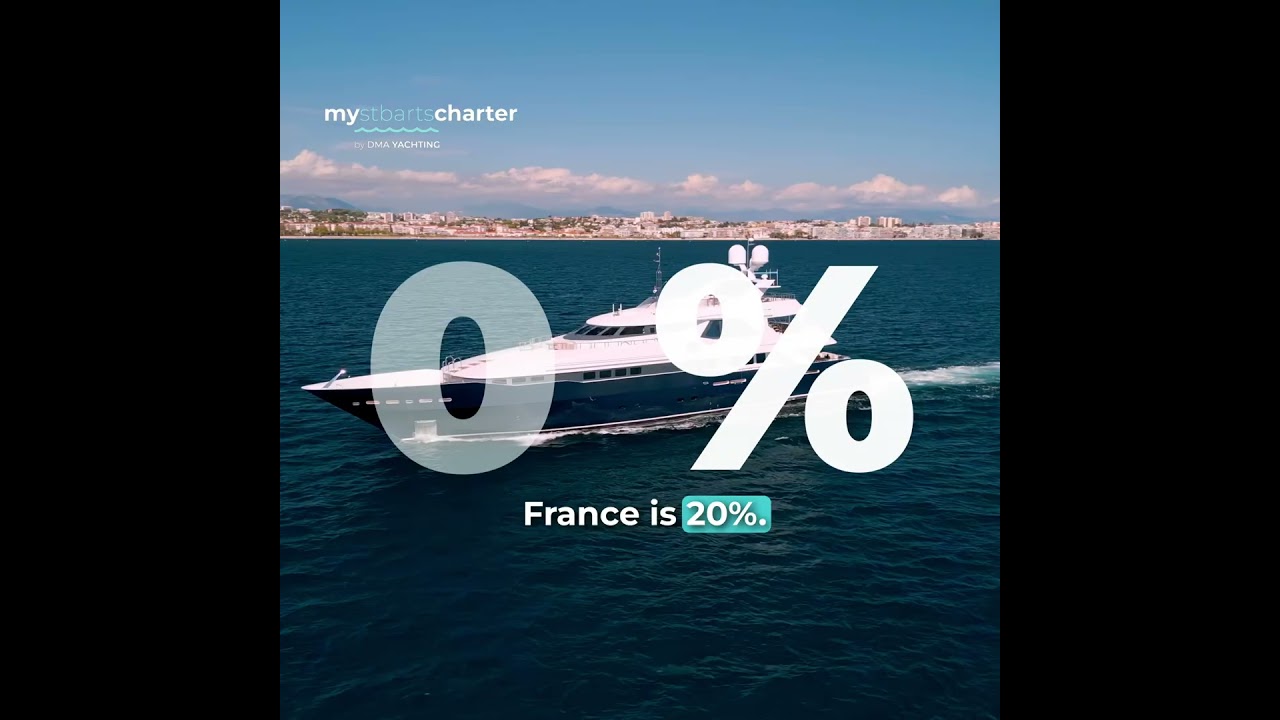
The yachts available in St Barts are on par with the South of France: top-of-the-range 40 to 70 meter motor yachts that cross over when the Caribbean season starts. And the best part is that the VAT falls away here. In the South of France you add 20% to the charter rate; in the Caribbean you do not pay it at all.
 Nadja Asmus
Charter Broker
Nadja Asmus
Charter Broker
Different Boats, Different Water
The BVI is a catamaran cruising ground, and that is a physical fact before it is a market fact. The islands form a ring around protected water, legs run 1 to 2 hours, and anchorages are everywhere, which is exactly what a sailing or power cat is built to enjoy. The fleet followed the geography: the BVI market is built around catamarans, from family boats at the entry tiers to large crewed cats that rival small motor yachts for space.
St Barts is open Leeward Islands water. The legs are still day-hops (St Maarten to Gustavia is about 13 to 17 nautical miles, Anguilla similar), but the water is exposed, and in winter the north swell arrives in episodes that can make unprotected anchorages rolly. That is the honest reason the fleet here skews toward large, stabilized motor yachts: a boat with zero-speed stabilizers sits still at anchor while a swell episode runs. It is also why our own bookings on this island skew motor. We wrote up the whole catamaran-or-motor-yacht question for St Barts separately, swell and all.
Either way, we plan the same daily rhythm: 2 to 3 hours of cruising a day at most, because you came for the islands, not the transit.
Land Life: Barefoot vs Polished
The BVI’s luxury is what is not there. No big resorts, no casinos, and jet skis are banned outright (charter yachts cannot even launch one they carry). You get beach bars, empty sand, world-class snorkeling, and quiet anchorages under real stars. Our clients who love the BVI love exactly this.
Broker insight
The BVI calls itself Nature's Little Secrets, and we mean it. No McDonald's, no big resorts, no jet skis in the water. If you want jet skis, a casino, and a resort scene, the Bahamas is for you. In the BVI, that is not a bug, it is a feature.
 Mo Pristas
CharterGuru
Mo Pristas
CharterGuru
St Barts runs the other way. The island is small, French, and polished: serious restaurants, beach clubs that feel more European than Caribbean, and shopping worth going ashore for. The yacht is your front-row seat to it. Days still look like a charter (swim stops, short hops, lunch on deck), but the evenings are the point, and Gustavia at dusk is the best harbor walk in the Caribbean.
Neither version is better. One of the fastest ways we route clients is one question: when you picture the best evening of the trip, are you barefoot on a beach or dressed for dinner?
Both in One Trip: The 10-Day Answer
This comes up constantly, and it genuinely works: the 2 destinations are about 100 nautical miles apart, and our brokers run the combination as a standard route. Start in St Maarten (easy flights, easy provisioning), spend nights 2 and 3 in St Barts, then cross to Spanish Town on Virgin Gorda to clear into the BVI, and you are at The Baths the same day. From there the North Sound, the Drake Channel islands, and an easy finish in the BVI or St Thomas. Yachts based in St Maarten are generally happy to drop off in the Virgin Islands, and the boats that run this route start around $80,000.
2 honest rules. First, give it 10 days or more: the crossing plus customs takes real time out of the schedule, and on 7 days you would feel it. Second, build the St Barts nights around the front of the trip; the BVI half then gets more relaxed, not less. For the St Barts side of the route, our 8-day St Martin, Anguilla and St Barts itinerary is the building block we start from.
When the BVI Is the Right Call, Honestly
We run both brokerage sites, so we have no reason to talk anyone up the price ladder. The BVI is the right answer when the group is young families, first-time charterers, snorkelers, and cat people; when the budget is $30,000 to $60,000; and when the dream is nature, not nightlife. St Barts is the right answer when the boat itself and the life ashore are the trip, the budget starts at $80,000, or the date is New Year’s.
The one-sentence version: the BVI is the easy-water, catamaran, and value answer; St Barts is the motor-yacht, scene, and festive-week answer; and the 10-day combination means you may not have to choose at all.
People also ask
Is a yacht charter cheaper in the BVI or St Barts?
The BVI, by a wide margin. Most of our BVI clients book $30,000 to $60,000 for a crewed week, while St Barts realistically starts at $60,000 to $80,000 for a catamaran and $80,000 to $100,000 for a motor yacht. The gap reflects the fleets: the St Barts winter fleet is largely Mediterranean-grade motor yachts. Both destinations add 25 to 30% APA.
Can you combine St Barts and the BVI in one charter?
Yes, and our brokers route it regularly: start in St Maarten, 2 to 3 nights in St Barts, then cross to Spanish Town to clear into the BVI. We recommend 10 days or more so the crossing and customs do not squeeze the week.
Do you pay VAT on a charter in St Barts or the BVI?
No. Neither destination charges VAT on the charter fee. The BVI charges small per-person cruising and parks fees, and St Barts has minor port and clearance fees; both appear as line items on your quote.


