Most St Barts charters we book are motor yachts, and the honest reason is comfort, not glamour: the island’s high season runs December through March, which is exactly when the Caribbean’s winter ground swell arrives, and a large motor yacht with zero-speed stabilizers is the boat that simply ignores it. A catamaran still works here, and for some groups it is the better week, especially on the St Maarten, Anguilla, and St Barts triangle with a captain planning anchorages around the forecast. Everything below is about private crewed charters of a week or more, not the half-day boats that crowd this search.
- Most of the St Barts crewed fleet is motor yachts, many of them 40 to 70 meter boats that summer in the Mediterranean and cross for the winter.
- The reason is ground swell: long north swell arrives in episodes from December through March, the heart of the season, and rolls the exposed anchorages.
- Zero-speed stabilizers cancel roll at anchor. That, not cabin finish, is the real comfort gap between the 2 platforms here.
- A catamaran still earns its place: crewed cats start around $60,000 to $80,000 a week here versus $80,000 to $100,000 and up for motor yachts, and the triangle route plays to a cat’s strengths.
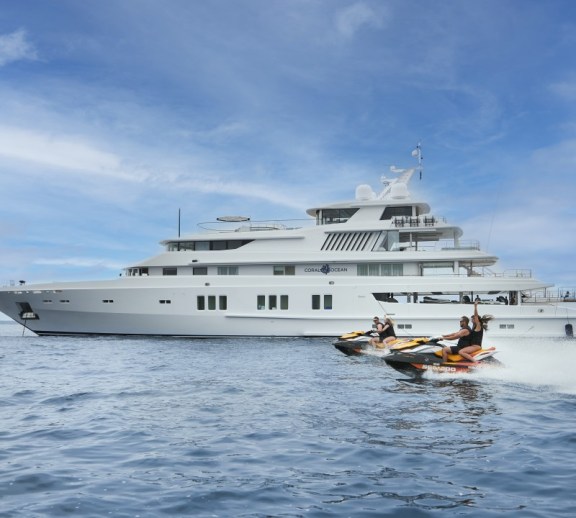
Why the St Barts Scene Skews Motor
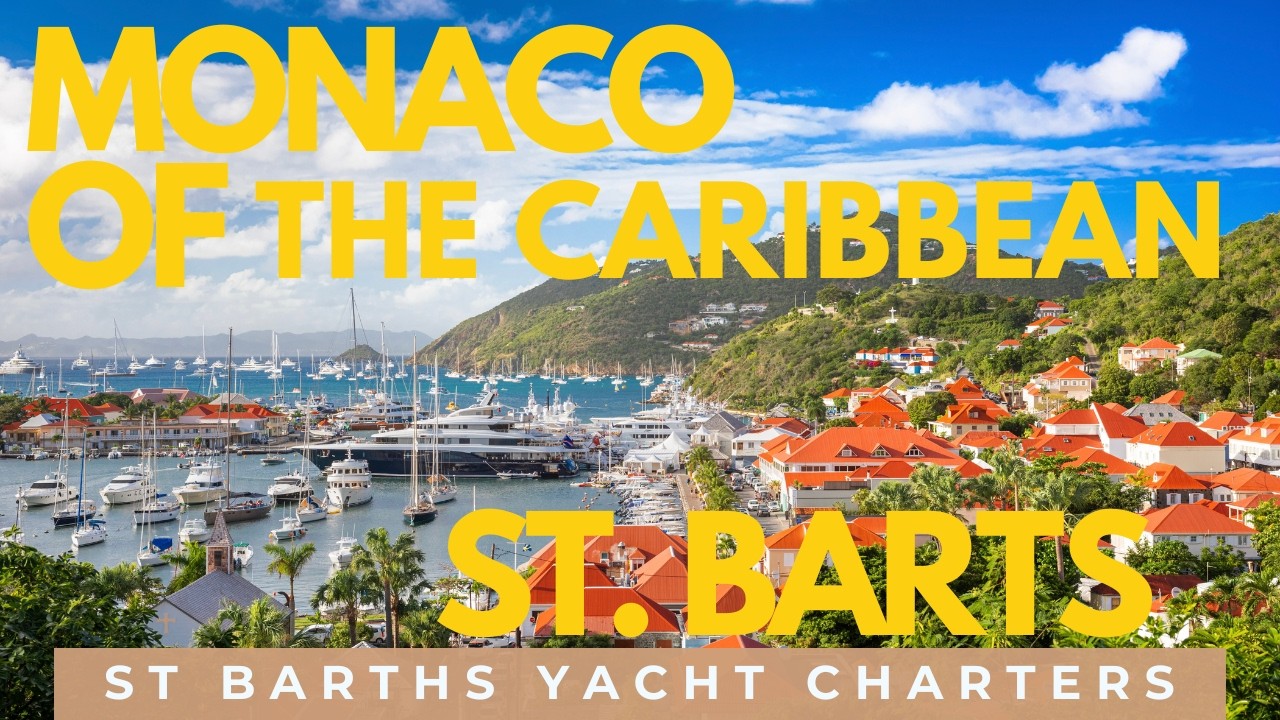
The fleet tells the story before any broker does. The yachts you see off Gustavia in winter are largely the same boats that spend summer between St Tropez and Sardinia: they cross the Atlantic when the Mediterranean season ends, so the caliber on this island is South-of-France-grade, and it is overwhelmingly motor. Our own bookings follow the same line: on the St Maarten, Anguilla, and St Barts run, our brokers close more motor yacht charters than catamarans, and the internal brief for this island has always been big motor yachts, because of the swell and because of what the week is for. St Barts evenings are hosted evenings: guests come back aboard dressed for dinner, and a motor yacht’s deck spaces are built for exactly that. Browse the current St Barts motor yacht fleet to see what winters here.

Broker insight
If we look at the yachts available in St Barts, they are on par with the South of France. A lot of the boats run between the Caribbean and the Med, so when the season starts, the yachts we find in the South of France make their way over. We are talking 40 to 70 meter motor yachts.
 Nadja Asmus
Charter Broker
Nadja Asmus
Charter Broker
The Swell Question, Answered Honestly
Ground swell is long-period swell generated by storms in the North Atlantic, sometimes thousands of miles away. It needs no local wind: a flat, sunny, windless day in St Barts can still carry a long northerly swell rolling in from a gale off Canada 3 days earlier. The season runs from roughly December through March, with edges either side, which is precisely the charter high season.
Two honest details keep this in proportion. First, swell comes in episodes, not as a permanent state: a typical event runs 2 to 3 days, occasionally up to a week, and plenty of winter days are glassy calm. Second, it is directional: north- and west-facing anchorages take it while the opposite coast stays quiet. Colombier, the island’s signature anchorage, is beautifully sheltered from the trade winds but open to exactly this northerly swell in winter, which is the local example of the whole phenomenon.
What matters for your week is what gets done about it, and this is a solved problem: swell shows up on forecasts days in advance, so captains here plan anchorages around it as routinely as they plan lunch. When a north swell is running, the fleet shifts to the protected sides and the itinerary flexes a few miles; when it is not, everything is open. On a stabilized motor yacht, most guests never learn a swell episode happened at all.
What Stabilizers Actually Change
Zero-speed stabilizers (fins or gyros that work at anchor, not just underway) are the single biggest comfort difference between the 2 platforms in this specific place. They actively cancel roll while the yacht sits at anchor; Seakeeper, the best-known gyro maker, claims up to 95% of roll eliminated at anchor, and while that is a manufacturer’s figure, the practical effect is real: dinner on the aft deck goes ahead during a swell episode instead of the boat relocating or the plates sliding. Crews upgrade specifically for this season.
Crew insight
It can get a bit of a chill in the Caribbean winter, and we have just had our stabilizers upgraded to the new zero-speed Quantum XT system to make that more comfortable for the guests at anchor.
A catamaran plays by different physics. It does not roll the way a monohull does, and in normal trade-wind chop it is famously steady; that reputation is earned. In a running ground swell, though, a cat pitches: the swell lifts the bows and sterns in turn, a motion sailors call hobby-horsing. It is gentler than rolling, but it is not the stabilized stillness of a big motor yacht, and there is no gadget that switches it off. The cat’s answer is positioning: be in the right anchorage, which in this triangle is almost always a short hop away.
When a Catamaran Still Works in St Barts
The honest pro-cat case is strong for the right group. The water between the 3 islands is day-hop water: St Maarten to Gustavia is about 13 to 17 nautical miles, Anguilla similar, and no leg in the triangle needs more than about 21. Our 8-day St Martin, Anguilla and St Barts itinerary plans the whole route at a 10-knot average precisely so any platform can run it, well inside our 2 to 3 hours of cruising a day rule.
A cat also does things the motor fleet does not. The shallow draft opens the sandbanks and beach anchorages of Anguilla properly, the trampoline and swim platforms make it the easiest boat afloat for kids and swimmers, and the cockpit-saloon layout keeps a family in one shared space all day. And the money is real: crewed catamarans here start around $60,000 to $80,000 for the week against $80,000 to $100,000 and up on the motor side, which is the difference between reaching this island and not. See the current St Barts catamaran options, and the full tier breakdown in our St Barts cost guide.
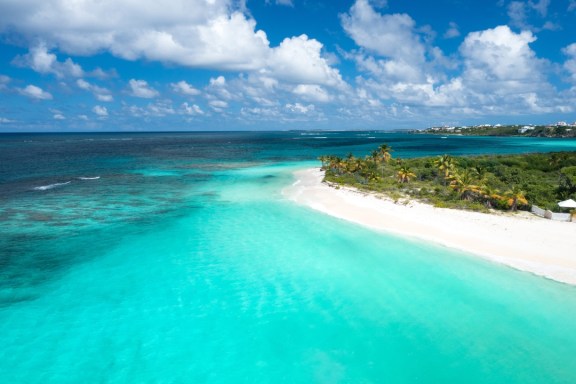
We book these weeks ourselves: we have routed catamaran groups on the St Maarten, St Barts, and Anguilla loop over New Year’s, and the formula is always the same: a captain who treats the swell forecast as gospel, and a group that prizes space and water access over absolute stillness at anchor.
How We Route Each Boat Type
The 2 platforms get 2 different weeks, on purpose. A motor yacht week anchors on St Barts itself: Gustavia evenings, Colombier and the nearby bays for the days, short repositioning hops, and the boat as the fixed luxury address for the event-scene half of the trip. A catamaran week runs the triangle: start in St Maarten, the quiet sands of Anguilla early, and St Barts as the crescendo at the end, with anchorage choices made day by day around the forecast. Same islands, same distances, different center of gravity.
If the Budget Says Catamaran First
One more honest route. If the brief is really a catamaran brief (space, kids, water toys, value) and the budget sits under the St Barts floor, the better answer is usually not a compromise boat here but a great boat somewhere built for cats: the BVI, where the cruising ground is sheltered, the cat fleet is the deepest in the Caribbean, and the same money buys the top of the market. We broker there too, so we will say so when it is true. When St Barts is the dream, we make St Barts work; when the boat is the dream, we put it in the water that suits it.
Cat week or motor yacht week? Tell us your group, your dates, and honestly, how much you care about motion at anchor. We will tell you straight which platform fits, then shortlist St Barts yachts that prove it, with the swell question already answered.
People also ask
Can you charter a catamaran in St Barts?
Yes. Crewed catamarans run the St Maarten, Anguilla, and St Barts triangle all season, starting around $60,000 to $80,000 for the week. The cat fleet is smaller than the motor side here, so the best boats book early.
Why do most St Barts charters use motor yachts?
Three reasons: the winter fleet migrates from the Mediterranean and is mostly large motor yachts; winter ground swell rolls exposed anchorages and stabilized motor yachts cancel it at anchor; and the island’s hosted, dressed-for-dinner evenings suit a motor yacht’s deck spaces.
What is ground swell in the Caribbean?
Long-period swell from North Atlantic storms that arrives from roughly December through March, often with no local wind. It comes in episodes of 2 to 3 days, affects north- and west-facing anchorages, and captains route around it using forecasts days in advance.
Do St Barts charter yachts have stabilizers?
Most of the larger motor yachts wintering here carry stabilizers, and many have zero-speed systems that work at anchor. We confirm the stabilizer setup per yacht when we build your shortlist.


